

University of Luzon’s Project CHILD Advances Holistic Community Development
Posted on 4th of Aug 2024 by UL Administrator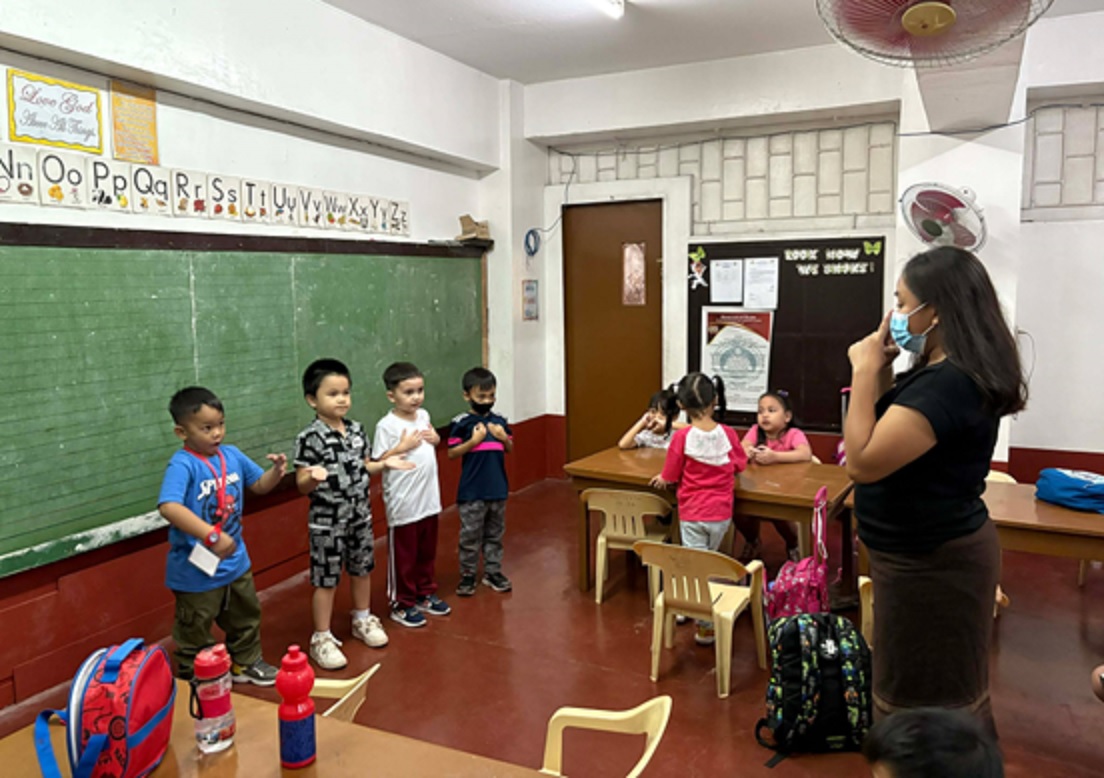
The University of Luzon (UL) reaffirms its foundational commitment to social responsibility through the enduring strength of its tri-focal functions: Instruction, Research, and Extension. While the first two provide the intellectual infrastructure for generating knowledge and skills, the extension services represent the institution’s core purpose—the dedicated effort to transfer the benefits of teaching and learning directly to the surrounding community. This function acts as the soul and conscience of the University, developing the essential essence of service and outreach.
A critical manifestation of this commitment is the University’s long-standing, multi-decade engagement with its adapted communities, specifically the Saint John Child Care Center and the UL Laboratory School. Since the early 1990s, this program has been instrumental in delivering vital early childhood education to children from underprivileged families, establishing a robust foundation for their cognitive, social, and emotional development. Highlighting its conviction that accessible education is a universal right, the University of Luzon further underscores its advocacy by providing 100% free tuition for all Kindergarten pupils enrolled in the UL Laboratory School, ensuring this essential developmental stage is not a privilege but a fundamental opportunity.
This broader mission is led by the College of Education through its innovative program, Project CHILD, which stands for Child-focused, Holistic, and Integrated Local Development. Spearheaded by the College of Education, with Dr. Imelda E. Cuartel and Prof. Petrona M. Agcaoili serving as Champions and key initiators, and major support from Prof. Joerom D. Onofre, Prof. Aillene Q. Caraulia, and Prof. Marvin T. Samson, the project employs a comprehensive and multidisciplinary framework. It meticulously integrates early childhood education with broader community interventions, including Literacy Education extended to parents, health awareness campaigns, and psycho-social support. This integrated approach is designed to tackle systemic issues related to both education and poverty alleviation simultaneously.
Project CHILD is a collective effort that exemplifies the spirit of collaboration across the University campus. It actively involves UL Administrators, Practice Teachers, current Luzonians, and dedicated Alumni, fostering a strong sense of civic duty and shared purpose among all stakeholders. Through its sustained and comprehensive operation, the initiative has yielded significant results, leading to improved learning outcomes for children while simultaneously empowering parents with essential knowledge and skills, thereby contributing to a better quality of life. The program stands as a powerful testament to the University of Luzon’s unwavering mission to extend its resources and expertise to address socio-economic disparities in its immediate vicinity, reinforcing the transformative power of education and the institution’s commitment to meaningful, sustainable community development.
The success of Project CHILD aligns directly with several critical global priorities, particularly the United Nations Sustainable Development Goals (SDGs). The provision of 100% free Kindergarten tuition and the focus on early childhood education directly fulfill the targets of SDG 4: Quality Education, specifically target 4.2, which ensures all children have access to quality early childhood development. By empowering parents through Literacy Education and addressing systemic poverty-related challenges, the initiative also makes a tangible contribution to SDG 1: No Poverty, helping families improve their overall quality of life and socioeconomic resilience. Furthermore, the holistic, integrated, and collaborative nature of the project—involving UL Administrators, faculty, students, and alumni—is a prime example of SDG 17: Partnerships for the Goals, demonstrating how institutional expertise can be effectively leveraged through broad engagement to achieve profound local development outcomes.