

University of Luzon Hosts SDG Localization Mentoring and Feedback Session
Posted on 7th of Jul 2026 by UL Administrator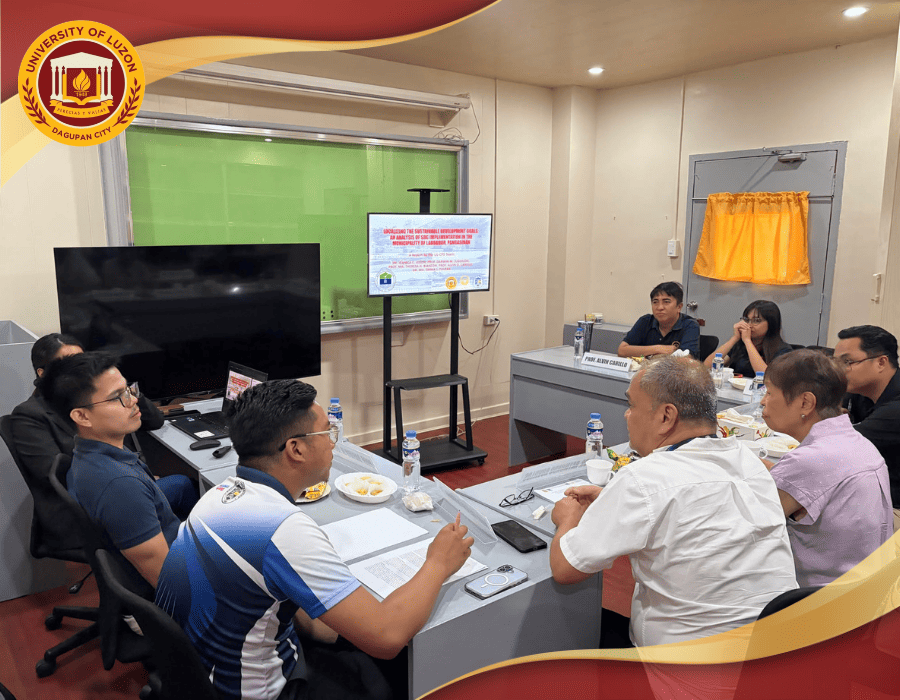
Reinforcing its commitment to sustainable development, research excellence, and community engagement, the University of Luzon (UL) hosted a face-to-face mentoring and feedback session under the Sustainable Development Goals (SDG) Localization Project in Pangasinan on May 7, 2026, at the UL Graduate School Defense Room.
The activity gathered representatives from the Center for Pangasinan Studies (CPS) and its Monitoring and Evaluation Committee, alongside University of Luzon researchers, to provide expert guidance in enhancing the quality and impact of the project’s research outputs. The session encouraged active participation among academic and research leaders, while the involvement of partner institutions enriched discussions and strengthened the recommendations for the study.
Among the participants were Dr. Perla Legaspi, Executive Director of CPS; Dr. Raymundo Rovillos, President of Pangasinan Polytechnic College; Prof. Nicanor Germono Jr., PPC Board Secretary and International Relations Officer; Dr. Gio Albert Cruz, Research Director of PHINMA UPang; and University of Luzon representatives led by Dr. Jeanica C. Joson, Research Director, together with Prof. Darwin M. Juguilon, Prof. Alvin O. Carillo, and Prof. Ma. Theresa H. Bianzon.
A highlight of the session was the presentation of the initial research report, “Localizing the Sustainable Development Goals: An Analysis of the SDG Implementation in the Municipality of Labrador, Pangasinan,” by Dr. Joson. By adopting a participatory research approach, the study examined local programs, policies, and development indicators to assess SDG implementation in Labrador, Pangasinan. The panel commended the study’s relevance and provided valuable recommendations to further strengthen its contribution to evidence-based governance and community development.
The initiative demonstrates how research can respond to local educational needs by providing evidence that informs policy implementation and supports education reform. It also helps shape educational strategies that improve education quality and contribute to school achievement. The mentoring session further strengthened the professional competence of researchers through expert feedback, knowledge sharing, and collaborative decision-making.
The SDG Localization Project advances SDG 4 (Quality Education) by promoting research and innovation, SDG 11 (Sustainable Cities and Communities) by supporting evidence-based local development planning, SDG 16 (Peace, Justice and Strong Institutions) through transparent and participatory governance, and SDG 17 (Partnerships for the Goals) by strengthening collaboration among academic institutions, research organizations, municipal government, and stakeholders.