University of Luzon Hosts Plenary Session on ETEEAP and Micro-Credentialing Initiatives
Posted on 17th of Jul 2026 by UL Administrator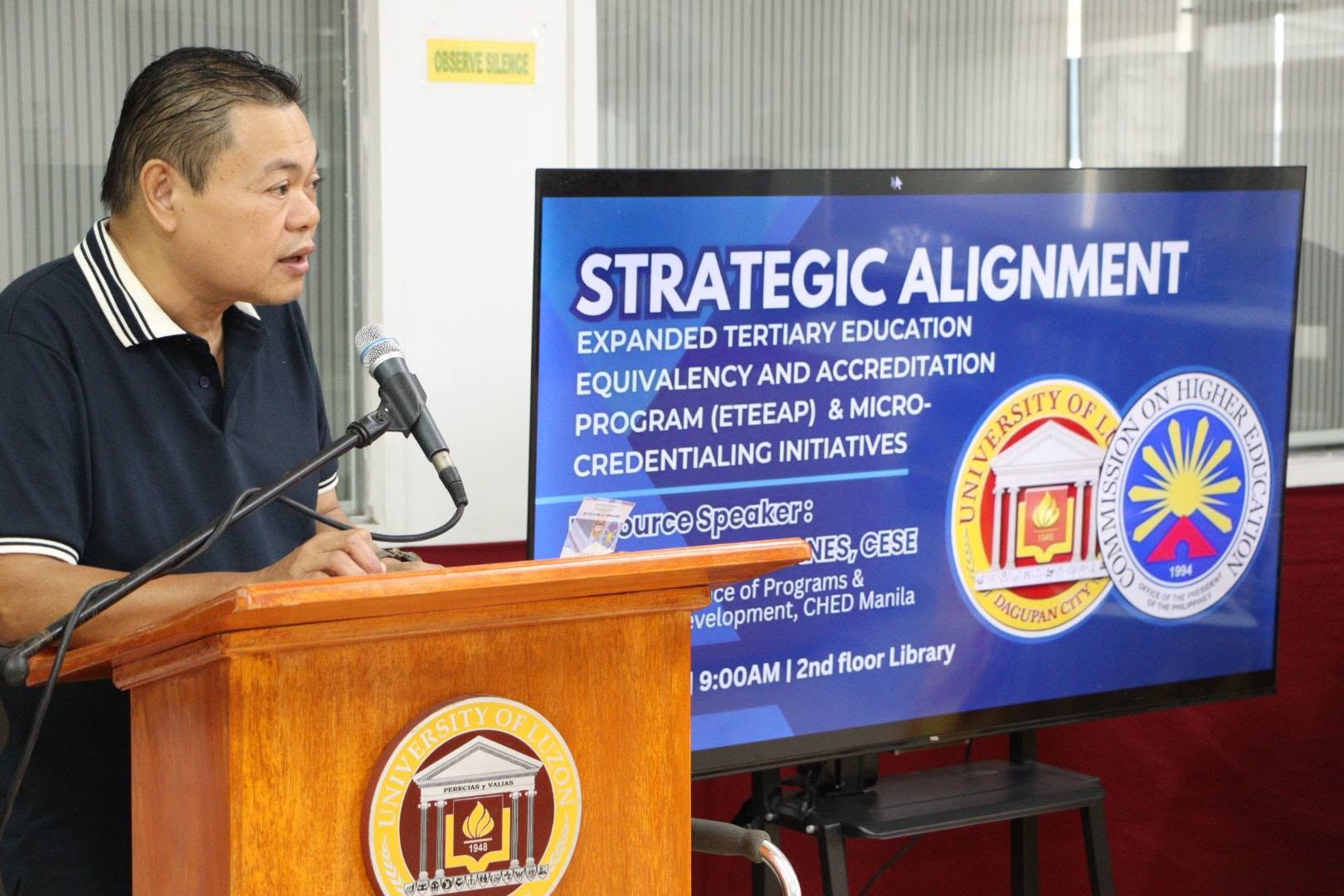
A whole-day plenary session titled “Strategic Alignment: ETEEAP & Micro-Credentialing Initiatives” was successfully conducted by the University of Luzon on May 8, 2026, at the 2nd Floor Library, reaffirming the University’s commitment to educational innovation and lifelong learning. The event gathered academic leaders, administrators, faculty members, and stakeholders to explore transformative approaches that expand access to higher education and respond to the evolving educational needs of learners and industries.
The plenary session featured Dr. Jimmy Catanes, CESE, from the Office of Programs, Standards and Development, as the resource speaker. He shared valuable insights on strengthening the implementation of the Expanded Tertiary Education Equivalency and Accreditation Program (ETEEAP) and advancing micro-credentialing initiatives that recognize prior learning, professional experience, and industry-relevant skills. These initiatives support education reform by promoting competency-based learning, professional education, and flexible learning pathways that validate prior learning and prepare learners for changing workforce demands.
The program commenced with welcome remarks from Prof. Tzarita Marie P. Mayo, Dean of the College of Medical Laboratory Science and Pharmacy. Messages of support and commitment to education quality were delivered by Dr. Luis M. Samson, Jr., University President; Dr. Aurora M. Samson-Reyna, Vice President for Academic Affairs; and Dr. Christine Nabor-Ferrer, Director IV of the International Affairs Service (IAS), CHED Manila.
Discussions emphasized the importance of learner-centered and active learning approaches in promoting inclusive education. Through the active participation of academic leaders and stakeholders, participants gained a deeper understanding of how ETEEAP and micro-credentialing can expand educational opportunities for working professionals and adult learners. These initiatives support lifelong learning, enhance professional competence, and provide flexible pathways for career advancement. By encouraging continuous upskilling and reskilling, they help improve employability, strengthen workforce readiness, and contribute to sustainable social and economic development.
The activity reflects the University’s continuing efforts to develop innovative academic programs that remain accessible, relevant, and responsive to the needs of diverse learners while promoting the effectiveness of education. The plenary session advances the following UN SDGs, SDG 4: Quality Education by promoting equitable access to higher education, lifelong learning, recognition of prior learning, and skills development through innovative academic pathways, SDG 8: Decent Work and Economic Growth by enhancing workforce readiness, employability, and continuous professional development, enabling individuals to remain competitive and productive in an evolving global economy, and SDG 17: Partnerships for the Goals by fostering collaboration, knowledge exchange, and stronger partnerships among higher education institutions, government agencies, industry stakeholders, and professionals in advancing accessible and responsive learning opportunities.