
University of Luzon held its 2026 Institutional Research Conference
Posted on 10th of Jun 2026 by UL Administrator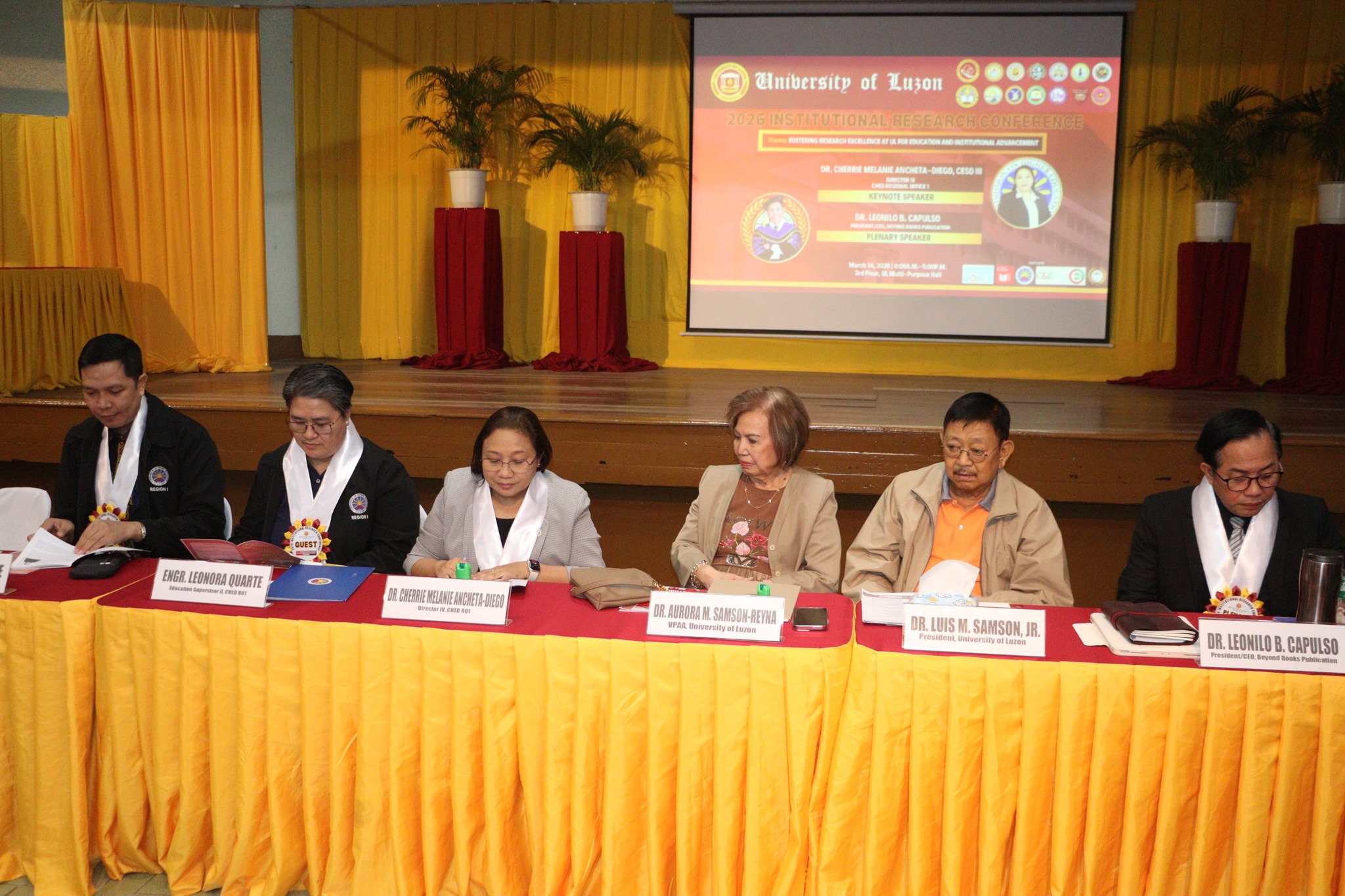
The University of Luzon, spearheaded by the UL Research Center, successfully conducted its 2026 Institutional Research Conference with the theme, “Fostering Research Excellence at UL for Education and Institutional Advancement.” The event gathered educators, researchers, administrators, and students in a celebration of academic inquiry, innovation, and institutional growth through research.
The conference formally opened with a Ribbon Cutting Ceremony at the Hallway of Abstracts, led by Dr. Cherrie Melanie Ancheta-Diego and Dr. Leonilo B. Capulso. This was followed by inspiring messages from Dean Tarzita Marie P. Mayo, the University President Dr. Luis M. Samson Jr., and the Vice President for Academic Affairs Dr. Aurora Samson-Reyna in the UL Multi-Purpose Hall. Each of this moments emphasized the vital role of research in shaping educational progress and societal development. Each of this moment reminded us that research is the bridge between what is and what could be.
A highlight of the morning session was the keynote address delivered by Dr. Cherrie Melanie Ancheta-Diego titled, “Advancing Research Excellence in Higher Education: From Knowledge Generation to Institutional Impact.” In her presentation, she underscored the significance of achieving global visibility in research and discussed the four core pillars of Higher Education Institutions: Instruction, Extension, Research, and Production. She also introduced the University of Luzon Framework for Research Excellence, a strategic guide designed to enhance research productivity, encourage innovation, and strengthen the societal impact of academic scholarly work.
In the afternoon, researchers showcased their studies in parallel sessions categorized into four tracks and two categories, namely:
Track 1: Education and Learning
Track 2: Business Administration and Management
Track 3: Health, Technology, Innovation, and Creativity
Track 4: Law Enforcement, Policy, and Governance
Researchers from various academic disciplines presented studies addressing contemporary issues and emerging challenges within their respective fields. The parallel sessions provided a valuable platform for knowledge sharing, intellectual exchange, and scholarly dialogue. Participants were given the opportunity to present their findings, receive constructive feedback from evaluators, and engage in meaningful discussions with fellow researchers and attendees.
The University also expressed its sincere appreciation to the University Administration led by Dr. Luis M. Samson Jr. and Dr. Aurora Samson-Reyna; to its partner institutions including the Commission on Higher Education Region I, Beyond Books Publication, and C&E Publishing; as well as to the UL Research Center, UL Graduate School, panelists, moderators, organizers, and committee members whose support and dedication contributed to the success of the conference.
The 2026 Institutional Research Conference concluded with closing remarks from Dr. Jeanica C. Joson, Director of the Research Center, who encouraged participants to continue pursuing meaningful and impactful research initiatives. Participants were also reminded that research remains a powerful instrument for generating knowledge, addressing societal concerns, and creating sustainable solutions. Through continued collaboration and scholarly engagement, the University of Luzon continues to strengthen its role as a center of research excellence, producing knowledge that supports sustainable development and creates meaningful impact in local, national, and global communities.
The studies presented during the conference reflected the University’s dedication to supporting the United Nations Sustainable Development Goals (SDGs). Many of the research initiatives aligned with SDG 3: Good Health and Well-Being through health-related investigations and community wellness initiatives; SDG 4: Quality Education through innovations in teaching, learning, and educational management; SDG 5: Gender Equality through studies promoting inclusivity and equal opportunities; SDG 8: Decent Work and Economic Growth through research on entrepreneurship, workforce development, and economic sustainability; SDG 9: Industry, Innovation and Infrastructure through technological advancements and innovative solutions; SDG 11: Sustainable Cities and Communities through research addressing community development and sustainability; and SDG 16: Peace, Justice and Strong Institutions through studies focused on governance, law enforcement, public policy, and institutional effectiveness.