
University of Luzon Delegates Forge International Ties at Virtual CommTECH Exploration 2025
Posted on 28th of Apr 2025 by UL Administrator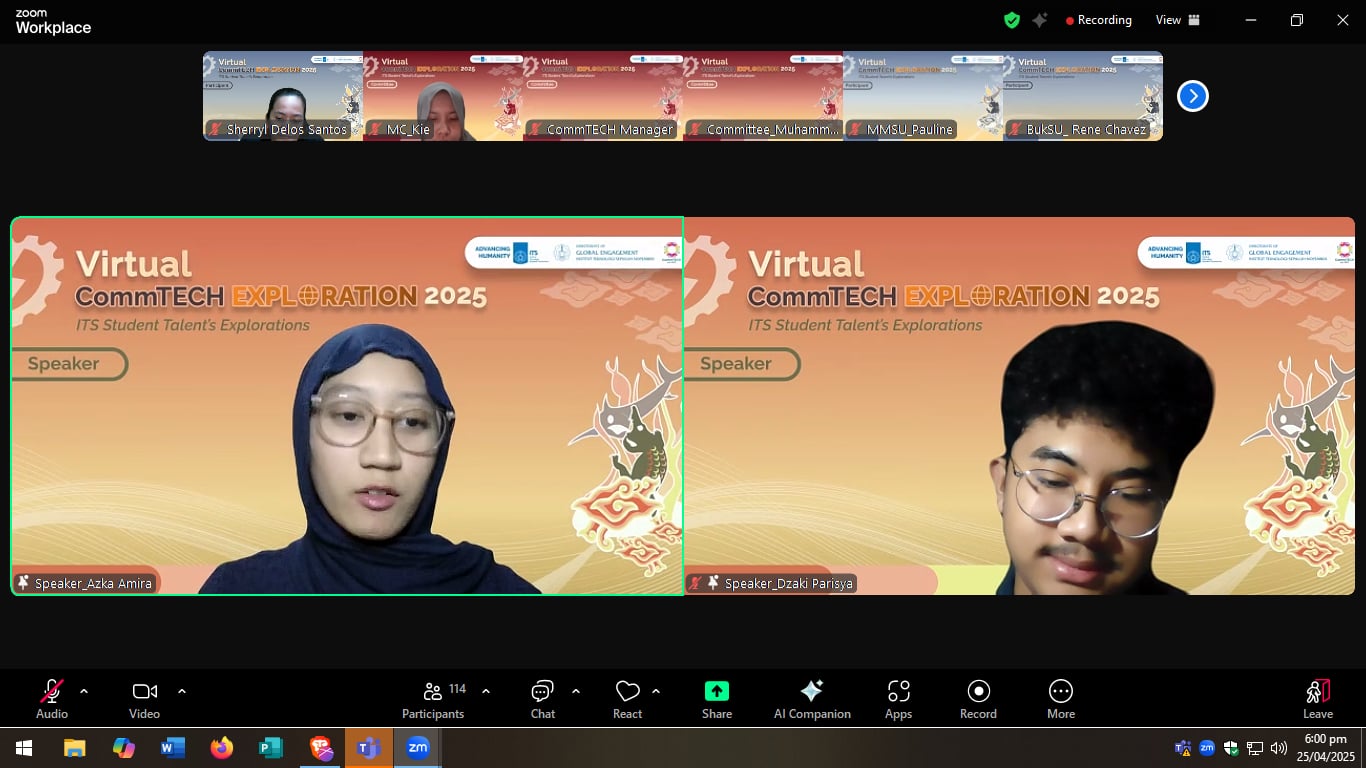
The University of Luzon (UL) has demonstrated its deep commitment to global engagement and academic internationalization through the active participation of its delegates in the Virtual CommTECH Exploration 2025. Hosted by Institut Teknologi Sepuluh Nopember (ITS), a distinguished technological university in Surabaya, Indonesia, the annual event serves as a premier platform for fostering innovation, cultural understanding, and worldwide collaboration. Now celebrating its 45th edition, the Community and Technological Camp (CommTECH) program continues to evolve, bringing together 167 participants from 27 local and international universities for a specialized virtual edition running from Monday, April 21, to Friday, May 2, 2025. This virtual mobility format allows Luzonians to experience global culture, engage in hands-on learning, and explore student talent without leaving the digital classroom.
The College of Business Administration and Hospitality – Tourism Management (ULCBAHTM) proudly represented the University of Luzon during the opening day, which featured a comprehensive welcome from ITS, an enlightening virtual campus tour, and a detailed look into the host university’s vibrant community, advanced research initiatives, and array of student-led innovations. The delegation is led by esteemed ULCBAHTM faculty members: Dr. Sherryl D. Delos Santos, Prof. Racquel M. Mejia, Prof. Marvex P. Cacanando, and Prof. Alvin O. Carillo. They are accompanied by outstanding student delegates: Alyzza Mae Manzon (Business Administration), Allysa Angelica C. Jose (Hospitality and Tourism Management), and Loraine Kyla B. Domantay (Hospitality and Tourism Management). Their presence underscores the university’s dedication to providing students and faculty with world-class cross-cultural academic experiences.
The second day continued the momentum of collaborative learning, shifting focus to the core of student life at ITS. Sessions were dedicated to “Managing Students’ Activities in ITS” and “Managing Students’ Clubs in ITS,” providing invaluable insight into the strategies employed by the host institution to cultivate a dynamic and supportive environment for student organizations and extracurricular development. The day concluded with a comprehensive virtual tour of Surabaya, famously known as the “City of Heroes.” Participants were able to virtually traverse the city’s significant cultural landmarks and modern attractions, gaining a deeper appreciation for Surabaya’s rich historical narrative and its pivotal role in Indonesia’s development and independence.
As the program progressed into Days 3 and 4, the curriculum diversified further, immersing the Luzonians in a range of specialized learning modules. These highlights included a practical “Fun Bahasa Class,” designed to introduce participants to the Indonesian language, and dedicated sessions covering “Automotive Students Innovations,” split into two parts across Wednesday and Thursday. Furthermore, engaging discussions were held in the “Journalistic Club,” providing perspectives on media and reporting in a digital age. These knowledge-based sessions were balanced by “Cultural Explorations Part 1,” which offered a showcase of Indonesian heritage and traditions. Each challenge and session served as a fresh opportunity for personal growth and the development of lasting global friendships among the international student participants.
The University of Luzon’s engagement in the Virtual CommTECH Exploration 2025 directly contributes to several Sustainable Development Goals (SDGs) as outlined by the United Nations. By facilitating the exchange of academic knowledge, pedagogical strategies, and student talent exploration, this initiative is a powerful commitment to SDG 4: Quality Education, ensuring inclusive and equitable quality education and promoting lifelong learning opportunities for all. The event’s focus on advanced research, student-led technological innovations, and the automotive sector particularly aligns with SDG 9: Industry, Innovation, and Infrastructure, supporting the building of resilient infrastructure, promoting inclusive and sustainable industrialization, and fostering innovation. Most importantly, the virtual mobility program—which successfully brought together faculty and students from multiple nations—serves as a concrete application of SDG 17: Partnerships for the Goals, strengthening the means of implementation and revitalizing the global partnership for sustainable development through academic cooperation.