

University of Luzon College of Computer Studies Students Demonstrate Technological Leadership at National AI Prompt Design Challenge
Posted on 20th of Jun 2025 by UL Administrator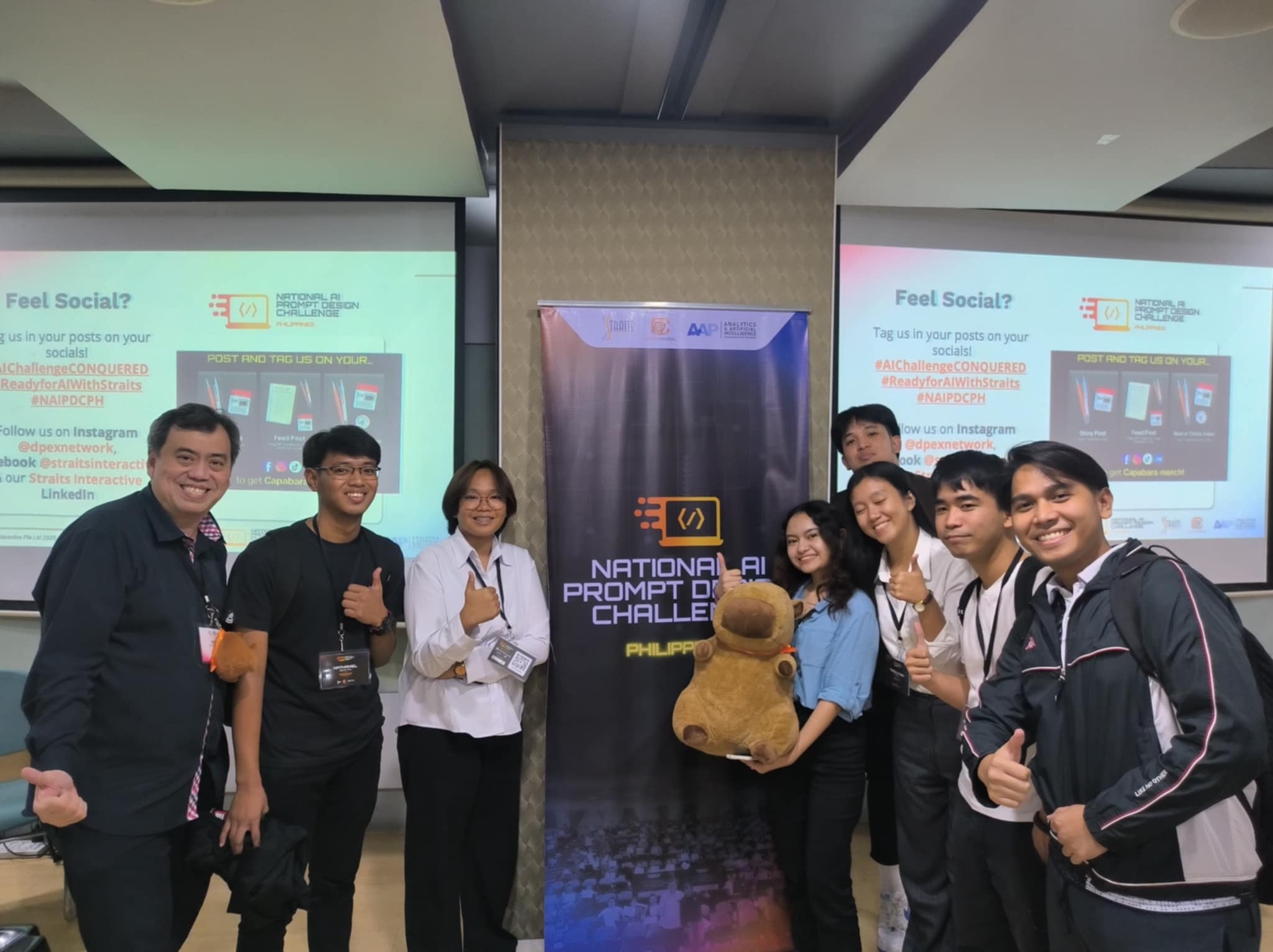
The University of Luzon (UL) reaffirmed its position as a forward-thinking institution in the realm of technological education as its College of Computer Studies (CCS) sent a delegation to the prestigious National AI Prompt Design Challenge. Held on June 20, 2025, at Angeles University Foundation (AUF) in Angeles City, Pampanga, the event served as a crucial national platform for harnessing generative artificial intelligence and no-code innovation. This participation, strongly supported by University management and spearheaded by the encouraging leadership of Dean, Dr. Diosdado C. Caronongan, underscores the university’s dedication to advancing cutting-edge digital literacy among its student body.
The accomplished team representing the University of Luzon comprised faculty member Mr. Cee Jay Lomibao, alongside six promising Luzonians: Loisa M. Caronongan, Nathaniel A. Biagtan, Russel I. Villanueva, Joshua D. Loyola, Jayven Mae T. Hadloc, and Rocelle Ann F. Hornada. Their attendance signaled a strategic institutional investment in empowering the next generation of Filipino innovators with skills essential for the evolving global economy.
The day’s rigorous schedule commenced with a comprehensive three-hour Bootcamp facilitated by TRAITS Interactive. Participants were immersed in the discipline of prompt engineering, learning techniques to create fully functional AI tools and applications without requiring traditional coding expertise. A critical component of this instructional phase was the in-depth coverage of responsible AI development, emphasizing the ethical, privacy, and security considerations paramount in the deployment of artificial intelligence systems. This focus ensured that the students’ approach to innovation was grounded in integrity and societal welfare.
A significant highlight of the challenge was the mentorship provided by Mr. Kevin Shepherdson, the esteemed CEO of Straits Interactive. Mr. Shepherdson offered expert guidance to the Luzonians on leveraging his company’s advanced AI platform, Capabara. His insights were instrumental in instructing participants on the methods required to build secure, sustainable, and impactful AI applications, thereby democratizing the capability to create powerful digital solutions regardless of prior extensive technical background.
The practical component of the event followed the training, culminating in a three-hour Challenge phase where the competing teams were tasked with transforming their conceptual designs into operable AI chatbots and finalized applications. The subsequent judging process is rigorous, evaluating submissions based on five core criteria: Functionality, User Experience (UX/UI), Innovation, Benefit and Potential, and crucially, Security and Ethical Standards. This structure ensures that only comprehensive, well-rounded, and ethically sound solutions are recognized.
The national-level competition proved to be a transformative academic and professional experience. It significantly enhanced the participants’ proficiency in AI development and design thinking methodologies, reinforcing their readiness to contribute effectively to the AI-driven future across diverse sectors, including business, education, and broader society. The University of Luzon’s successful involvement in this high-caliber event definitively reinforces its institutional commitment to technological leadership, excellence in education, and the forward advancement of its Luzonians in the age of artificial intelligence.
The College of Computer Studies’ initiative to participate in the National AI Prompt Design Challenge directly aligns with several critical United Nations Sustainable Development Goals (SDGs). Specifically, the effort supports SDG 4: Quality Education by providing students with cutting-edge skills in AI and design thinking, thereby preparing them for lifelong learning and the demands of the fourth industrial revolution. It promotes SDG 9: Industry, Innovation, and Infrastructure by actively fostering technological innovation and capacity-building within the university environment and encouraging the development of secure, responsible digital tools. Furthermore, the collaboration with industry leaders like Straits Interactive and TRAITS Interactive exemplifies the spirit of SDG 17: Partnerships for the Goals, strengthening global partnerships necessary to achieve sustainable development through technology transfer and shared knowledge.