

The Filipino Brand of Service Excellence Training at University of Luzon
Posted on 11th of Feb 2026 by UL Administrator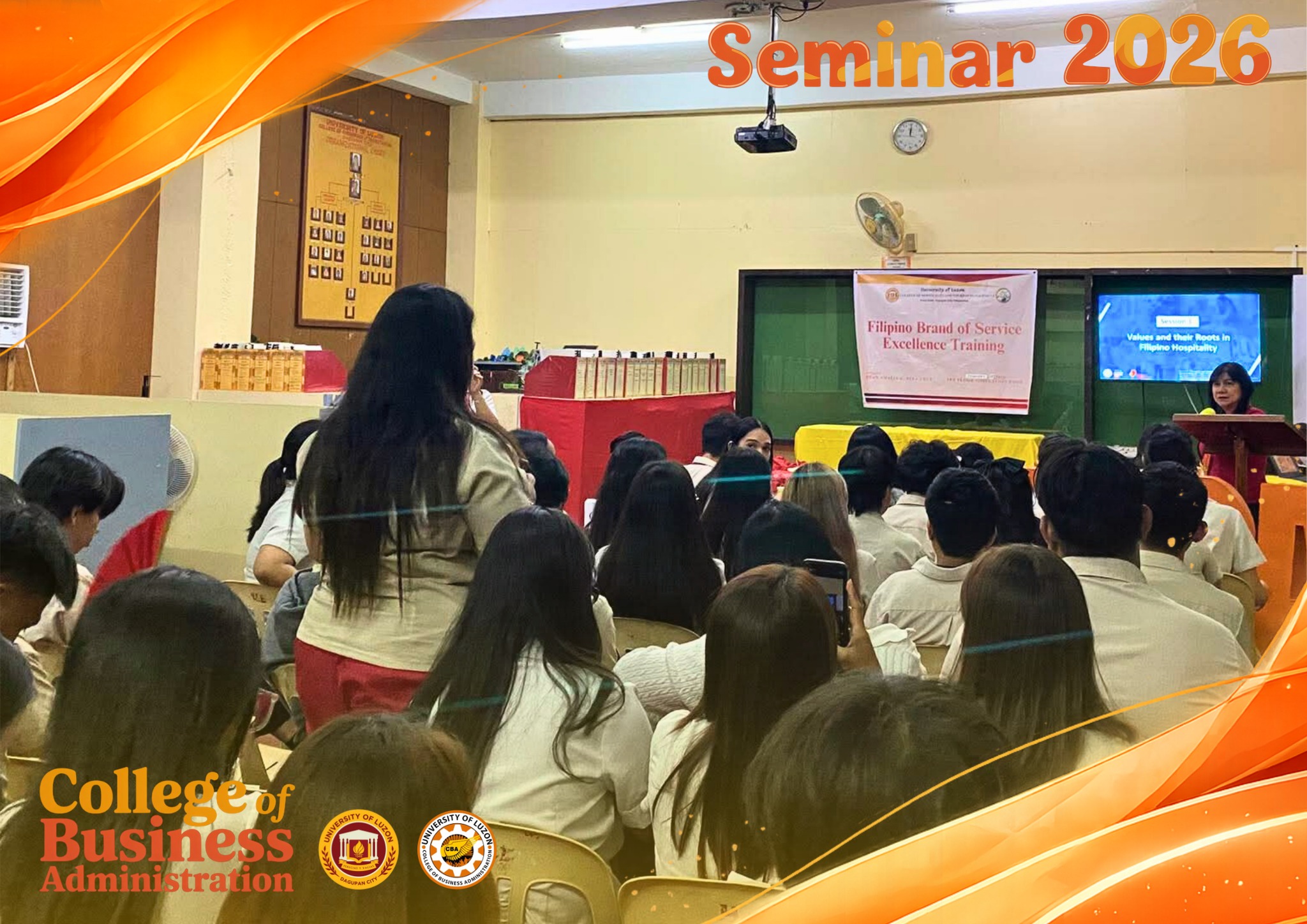
On February 10, 2026, the University of Luzon Simulation Room served as the venue for a pivotal academic seminar titled “Filipino Brand of Service Excellence Training.” Commencing at 1:00 PM, the event was meticulously organized as a core component of the academic module for Business Administration students. The primary objective of the training was to instill a deep-rooted understanding of the Filipino brand of service—a unique blend of cultural values and professional standards designed to equip Luzonians with a competitive edge in their future professional careers. By focusing on the intersection of heritage and industry, the university continues its mission of producing graduates who are not only technically proficient but also culturally grounded.
The seminar was distinguished by the presence of Dr. Amalia G. Dela Cruz, the Dean of the University of Luzon College of Business Administration, Hospitality, and Tourism Management (ULCBAHTM), who served as the Guest of Honor and Speaker. A visionary leader and an advocate for service innovation, Dr. Dela Cruz provided an extensive discourse on how Filipino values serve as the fundamental pillar of genuine, world-class service. Her lecture transcended basic business theory, exploring the nuances of how national identity influences the way professionals promote Philippine tourism, welcome international guests, and foster long-term customer relationships. Dr. Dela Cruz emphasized that for Luzonians entering the global market, the warmth and sincerity inherent in Filipino culture are not merely social traits but vital professional assets.
Central to the training was the comprehensive discussion of the 7Ms of Filipino Service: Maka-Diyos, Maka-Tao, Maka-Kalikasan, Maka-Bansa, Masayahin, May Bayanihan, and May Pag-Asa. These principles represent the distinct identity of national hospitality, encouraging students to integrate respect, environmental stewardship, patriotism, and optimism into their business interactions. To ensure these values were internalized, the seminar utilized dynamic pedagogical methods, including a group activity where students created video presentations featuring coordinated gestures to represent each of the 7Ms. This exercise successfully combined physical movement with ideological learning, fostering a sense of camaraderie and creative expression among the participants.
The practical application of these theories was further realized through detailed role-playing simulations of various tourism touchpoints. Students engaged in scenarios encompassing Arrival and Welcome, Accommodation, Transport and Tours, Dining, Shopping, and Departure. These simulations allowed Luzonians to experience the complexities of real-world service delivery, transforming theoretical knowledge into practical skills. By navigating these simulated environments, students learned how to convert routine transactions into meaningful human connections, adhering to the highest standards of excellence. The event concluded with a formal presentation of a token of gratitude to Dr. Dela Cruz, followed by a commemorative photo session marking the successful completion of the module.
This training initiative aligns significantly with several United Nations Sustainable Development Goals (SDGs), particularly SDG 4 (Quality Education) and SDG 8 (Decent Work and Economic Growth). By providing specialized training that bridges the gap between classroom learning and industry requirements, the University of Luzon ensures that its students receive a high-quality, relevant education that prepares them for productive employment. Furthermore, the emphasis on “Maka-Kalikasan” supports SDG 12 (Responsible Consumption and Production) by fostering an ethical approach to service and tourism that respects environmental limits. Through these efforts, the university contributes to the development of a skilled workforce capable of driving sustainable economic growth while upholding the cultural and moral integrity of the Philippines.
Latest Video AD
Latest Gallery


Message from
the President
"We are committed in providing our students the best education possible –from their first day in school to the day they start their careers. It’s actually a task we’ve been doing since its inception in 1948"