
University of Luzon Empowers Student Leaders Through Community-Based Project Management Seminar
Posted on 28th of Jan 2026 by UL Administrator
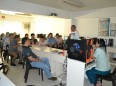
The University of Luzon, through the collaborative efforts of the Center for Integrated Extension Services, the National Service Training Program (NSTP) Unit, and ULIVE, successfully convened the Community-Based Project Management Seminar & Workshop on January 24, 2026. Held at the CPA Review Center, Room 315, the event served as a critical capacity-building platform designed to fortify the technical and leadership competencies of Luzonians tasked with spearheading social development initiatives. Grounded in the principle that rigorous preparation is the cornerstone of institutional success, the seminar-workshop provided student leaders and project implementers with a comprehensive framework for planning, executing, and monitoring community-driven programs. By emphasizing the necessity of responsive and impact-oriented interventions, the University of Luzon continues to cultivate a culture of excellence and accountability among its student body, ensuring that extension services are not merely performative but are deeply rooted in the actual needs of the communities they serve.
The instructional phase of the event featured an assembly of experienced educators and practitioners who provided specialized insights into the lifecycle of project management. Dr. Carmelo John E. Vidal, Director of Extension Services, opened the proceedings with a foundational lecture on the principles of project management, establishing the strategic mindset required for effective community engagement. This was followed by a technical session led by Prof. Darwin M. Juguilon, the Extension Services In-House Coordinator, who guided participants through the intricacies of crafting effective community-based project proposals. Financial stewardship was addressed by Prof. Mariphie C. Osian, an NSTP Trainer, who detailed the rigors of budgeting and transparent reporting, while Prof. Ma. Theresa H. Bianzon provided essential training on documentation, monitoring, and evaluation techniques to ensure project sustainability. The curricular segment concluded with Mr. John Wxyz S. Dagarag, who shared expertise on portfolio designing fundamentals, equipping Luzonians with the tools to present their socio-civic contributions with professional clarity.
Following the theoretical sessions, the program transitioned into a practical workshop facilitated by Prof. Juguilon. This hands-on component required student leaders to conceptualize and develop concise project proposals, translating classroom knowledge into actionable strategies. Participants were challenged to identify specific community needs and articulate clear objectives, methodologies, and expected outcomes. The resulting proposals underwent a rigorous review process, allowing students to receive constructive critiques and refinements from the facilitators. This interactive environment fostered critical thinking and cross-disciplinary collaboration, preparing the participants to navigate the complexities of real-world implementation. Through this rigorous exercise, the university ensured that its student leaders are not only visionaries but also capable administrators of social change, ready to deliver high-impact services to the broader community.
In conclusion, the activities conducted during this seminar-workshop directly align with several United Nations Sustainable Development Goals (SDGs), reflecting the University of Luzon’s commitment to global standards of progress. By providing quality leadership training and practical skills, the initiative supports SDG 4 (Quality Education) by enhancing the lifelong learning opportunities and technical competencies of Luzonians. Furthermore, the focus on conceptualizing projects that address local societal needs contributes significantly to SDG 11 (Sustainable Cities and Communities) and SDG 17 (Partnerships for the Goals), as it fosters a collaborative ecosystem between the academe and the grassroots level to achieve lasting socio-economic resilience.