

The 13th ICT Congress at University of Luzon Fosters Future-Proof Learning and Industry Collaboration
Posted on 27th of Mar 2025 by UL Administrator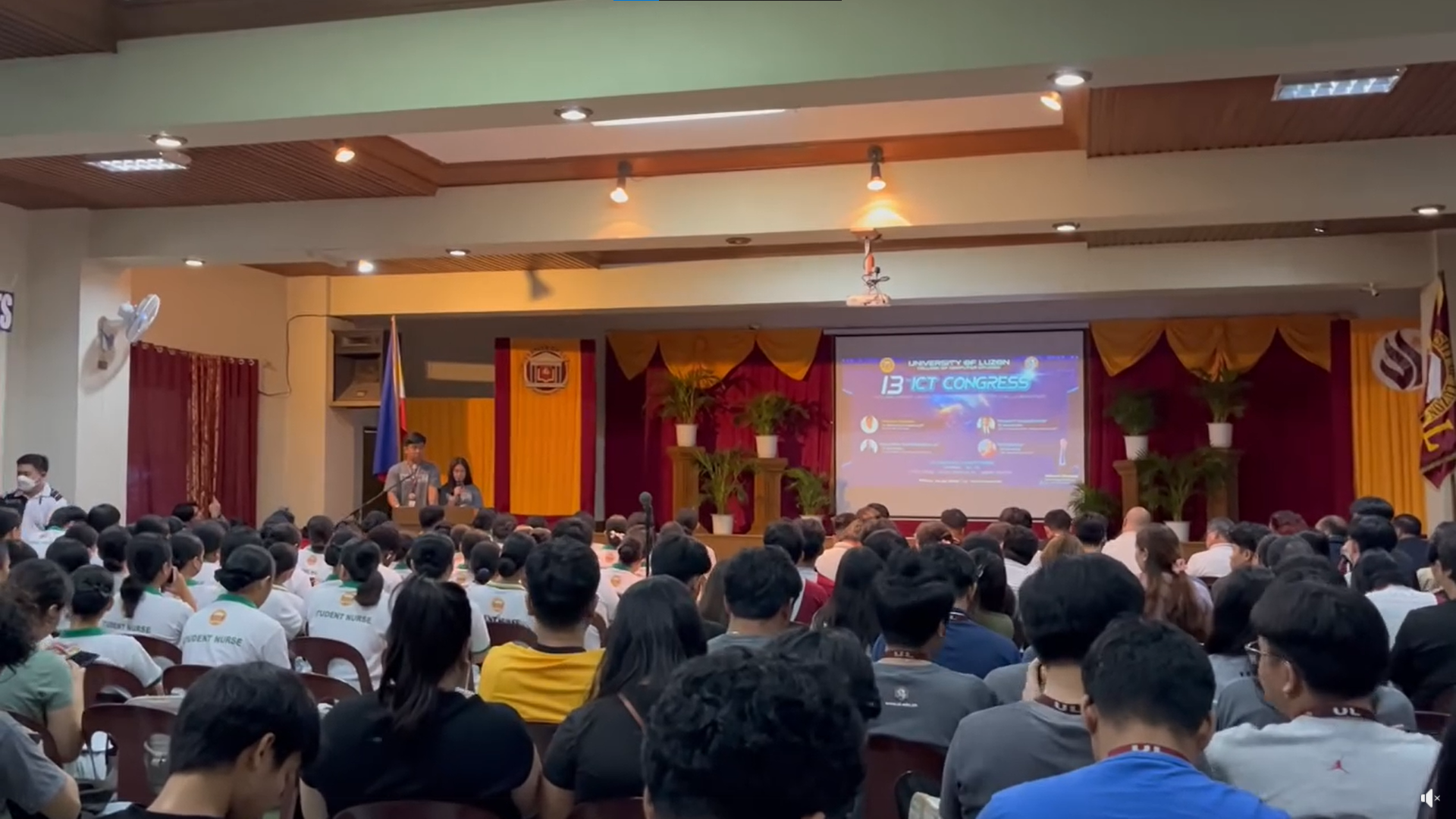
The University of Luzon (UL) successfully hosted the 13th ICT Congress on March 24-25, 2025, transforming the Multi-Purpose Hall into a dynamic hub for technology and innovation. Under the compelling theme, “Future-Proof Learning Through Industry Collaboration,” the two-day event provided a critical platform for Luzonians, educators, and leading industry experts to engage with the latest trends in automation, cybersecurity, and information technology. The Congress underscored the University’s commitment to providing an educational experience that directly aligns with the demands of the modern, rapidly evolving professional landscape.
Day one of the Congress was dedicated to showcasing the technical excellence and creative prowess inherent in the student body. Luzonians demonstrated their skills through a series of high-stakes ICT Competitions across multiple disciplines. These rigorous events included Programming, testing logic and coding efficiency; a comprehensive Quiz Bee, challenging theoretical knowledge; and the creation of impactful Digital Posters and Digital Innovation Ads, blending creativity with technical messaging. The day culminated with the Hardware Servicing competition, a testament to the practical, hands-on skills essential for the industry.
The second day shifted focus to professional development and future-gazing with a robust Seminar and Tech Talks agenda. The program was anchored by a keynote address from Mr. Gerald Victor M. Calamaan, MIT, OIC Chief of the Technical Development Division (TDD) at DICT Region I, who provided valuable insights into regional technological advancements and emerging industry directions. This was followed by a series of thought-provoking sessions designed to expose students to cutting-edge concepts. Mr. Roberth Lloren, DPO and AI Compliance Engineer at Makerspace InnovHub OPC, presented on “Prompt Engineering,” a rapidly growing skill set in the era of artificial intelligence. Mr. Noriel Vasallo of FS Automation & Solutions Inc. illuminated the principles and applications of “Industry Automation 4.0,” detailing the shift toward smart, interconnected manufacturing processes. Finally, Mr. Tzar Umang, CEO of Makerspace InnovHub OPC, offered a deep dive into “Permaweb,” exploring decentralized and permanent data storage solutions. The Congress also featured a special welcome message from Prof. Angel S. Reyna, Director of International Relations at UL, emphasizing the global context of the discussions.
A significant highlight of the event was the robust interdisciplinary collaboration demonstrated by the organizing bodies. The Congress was made possible through a strong partnership with the College of Nursing and the College of Engineering & Architecture – Architecture and Information Technology (AIT), proving that technology is not a siloed discipline but an integral component across all fields of study. This collaborative spirit reinforced the key takeaways of the event, including the strengthening of industry-academic ties, the provision of actionable insights into emerging technologies for all participants, the successful showcase of student creativity and technical skills, and the expansion of vital networking opportunities with leaders shaping the future of the industry. The success of this gathering owes immense gratitude to all speakers, participating Luzonians, and dedicated organizers, including video editor and Interactive Bloggers Society President, Irene Soriano, whose capture of the highlights ensured the event’s lasting memory.
The transformative activities conducted during the 13th ICT Congress directly align with several United Nations Sustainable Development Goals (SDGs), underscoring the University of Luzon’s role as a catalyst for global progress. The emphasis on “Future-Proof Learning” and the rigorous student competitions contribute directly to SDG 4 (Quality Education), ensuring inclusive and equitable education and promoting lifelong learning opportunities by equipping students with high-demand digital skills. By providing insights into “Industry Automation 4.0″ and expanding networking with employers, the Congress supports SDG 8 (Decent Work and Economic Growth), promoting productive employment and fostering entrepreneurship. Furthermore, the focus on emerging technologies like Prompt Engineering and Permaweb, coupled with the DICT partnership, advances SDG 9 (Industry, Innovation, and Infrastructure) by building resilient infrastructure and promoting inclusive and sustainable industrialization and innovation. Finally, the inter-college and external industry partnerships exemplify the spirit of SDG 17 (Partnerships for the Goals), strengthening the means of implementation and revitalizing global partnership for sustainable development.