
University of Luzon Students Conclude Successful Hybrid Asia Exploration Program
Posted on 20th of Sep 2024 by UL Administrator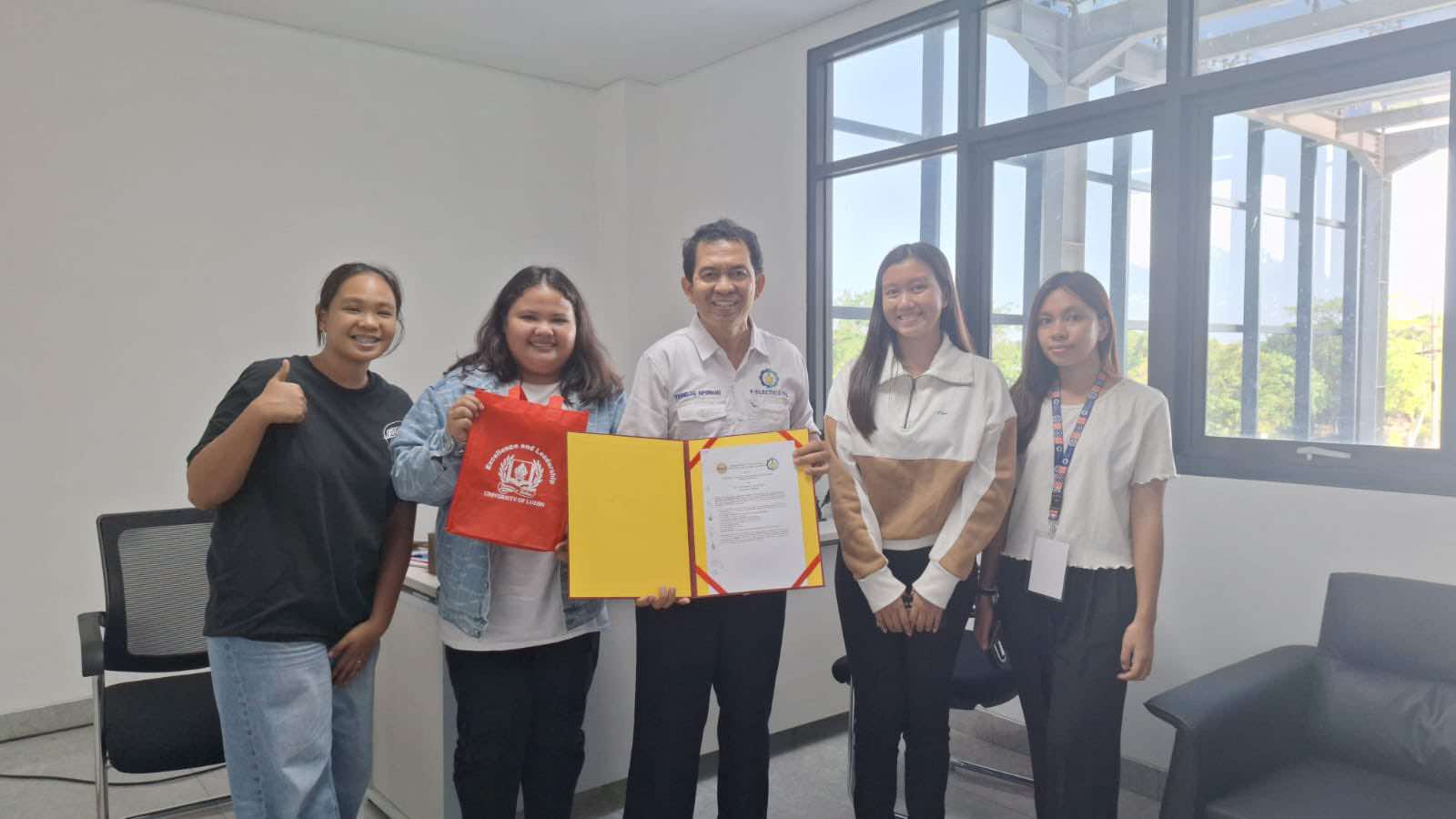
The University of Luzon (UL) is set to welcome back four of its most dedicated scholars from the College of Computer Studies (CCS) following their successful participation in the Hybrid Asia Exploration 2024 (HAX 2024) program. Mary Rose R. Guntang, Jayven Mae T. Hadloc, Rocelle Ann F. Hornada, and Chris Angel R. Rongilla, all pursuing a Bachelor of Science in Information Technology, are scheduled to return to the Philippines on September 21, 2024, bringing with them invaluable experience and enhanced global perspectives. Their journey in HAX 2024 underscores UL’s continuous drive to provide its students with opportunities that transcend conventional academic boundaries.
The HAX 2024 program was meticulously designed to cultivate an environment of international cooperation, cultural exchange, and technological co-creation among students across Asia. For the four Luzonians, this engagement served as a unique platform to collaborate with regional peers on addressing complex societal challenges through innovation. This focus aligns precisely with the University of Luzon’s core mission to produce globally competitive graduates who are not only technically proficient but also socially responsible leaders prepared to make tangible contributions to the world community. The program’s intensive nature ensures that participants are equipped with critical thinking skills and cross-cultural competencies essential for succeeding in the modern, interconnected professional landscape.
A defining feature of the students’ immersion was the expert guidance they received from Dr. Hari Ginardi, the Head of the Information Technology Department at Institut Teknologi Sepuluh Nopember (ITS) in Surabaya. Dr. Ginardi’s involvement was particularly significant given his established rapport with the University of Luzon, which was cemented through a Memorandum of Understanding (MOU) signing and subsequent faculty lecture exchanges in December 2023. Serving as a dedicated mentor throughout their stay, his profound expertise and deep understanding of the Indonesian academic and cultural context proved invaluable, significantly enriching the students’ learning curve and providing them with actionable, real-world insights into technological development in the region.
Under Dr. Ginardi’s distinguished mentorship, the UL students engaged in a diverse array of activities that went beyond classroom instruction. These included high-level academic exchanges, immersive cultural programs designed to foster deep mutual understanding, and direct community engagement initiatives. Such comprehensive experiences were instrumental not only in broadening their intellectual horizons and technical knowledge but also in honing essential soft skills, particularly their intercultural communication abilities and capacity to adopt a truly global outlook. As these four promising Luzonians prepare to rejoin their classmates and faculty, their participation in HAX 2024 stands as a testament to the thriving partnership between the University of Luzon and ITS.
The University of Luzon students’ successful completion of the Hybrid Asia Exploration 2024 program has yielded institutional benefits far beyond individual academic achievement, demonstrating a strong commitment to global responsibility. By actively promoting international academic mobility and skill-building in a technological context, the initiative directly contributes to the realization of several key United Nations Sustainable Development Goals (SDGs). Specifically, the program advances SDG 4: Quality Education by ensuring inclusive and equitable quality education and promoting lifelong learning opportunities through exposure to international standards and advanced technological training. It aligns with SDG 9: Industry, Innovation, and Infrastructure by fostering applied research and innovation, which equips future IT professionals to build resilient infrastructure and promote sustainable industrialization. Furthermore, by facilitating cultural exchange and minimizing educational gaps between nations, the program contributes meaningfully to SDG 10: Reduced Inequalities, strengthening the bonds and mutual capabilities necessary for a more equitable global academic landscape.