

University of Luzon Student Research Teams Present Studies at PINS 2026
Posted on 8th of Sep 2026 by UL Administrator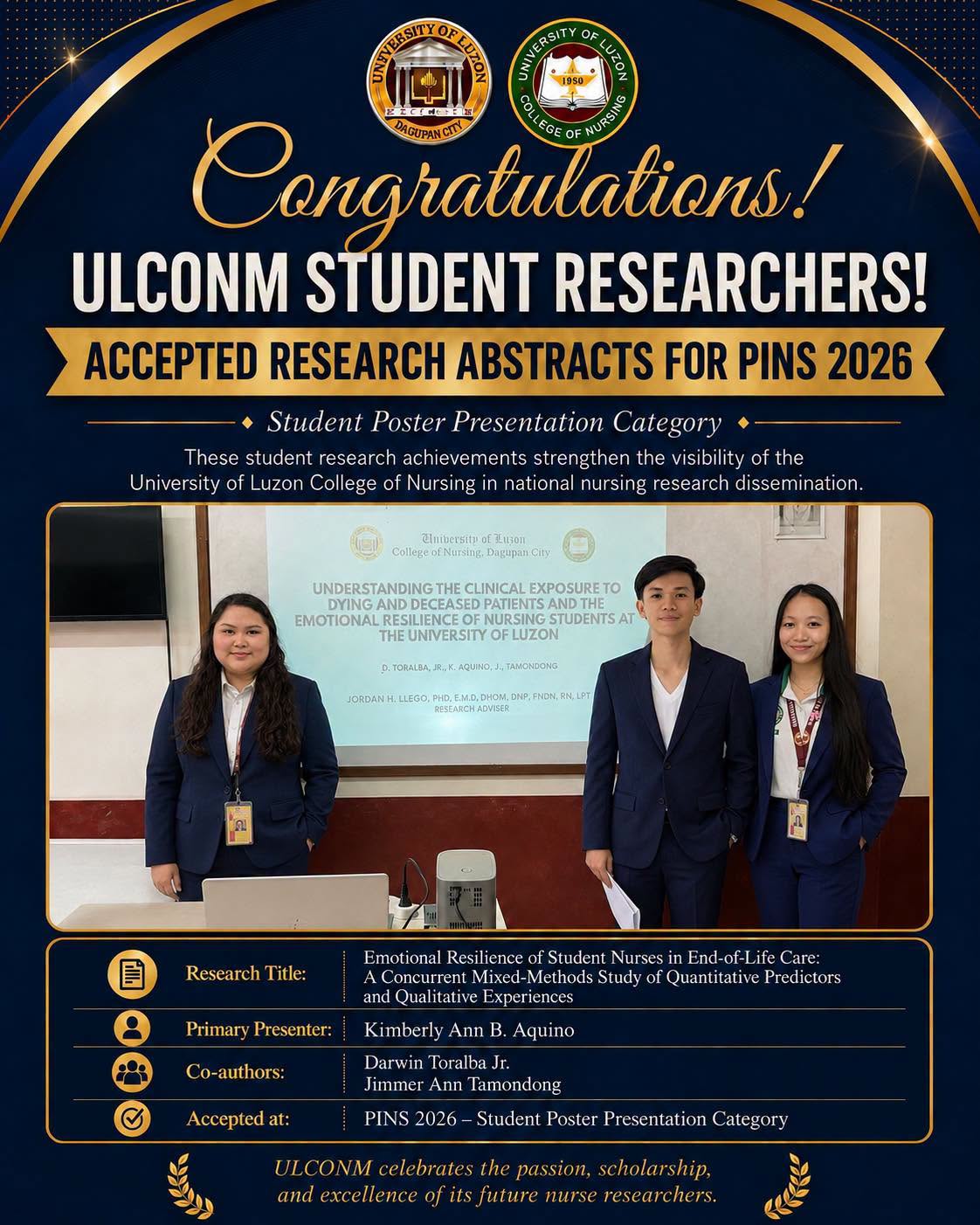
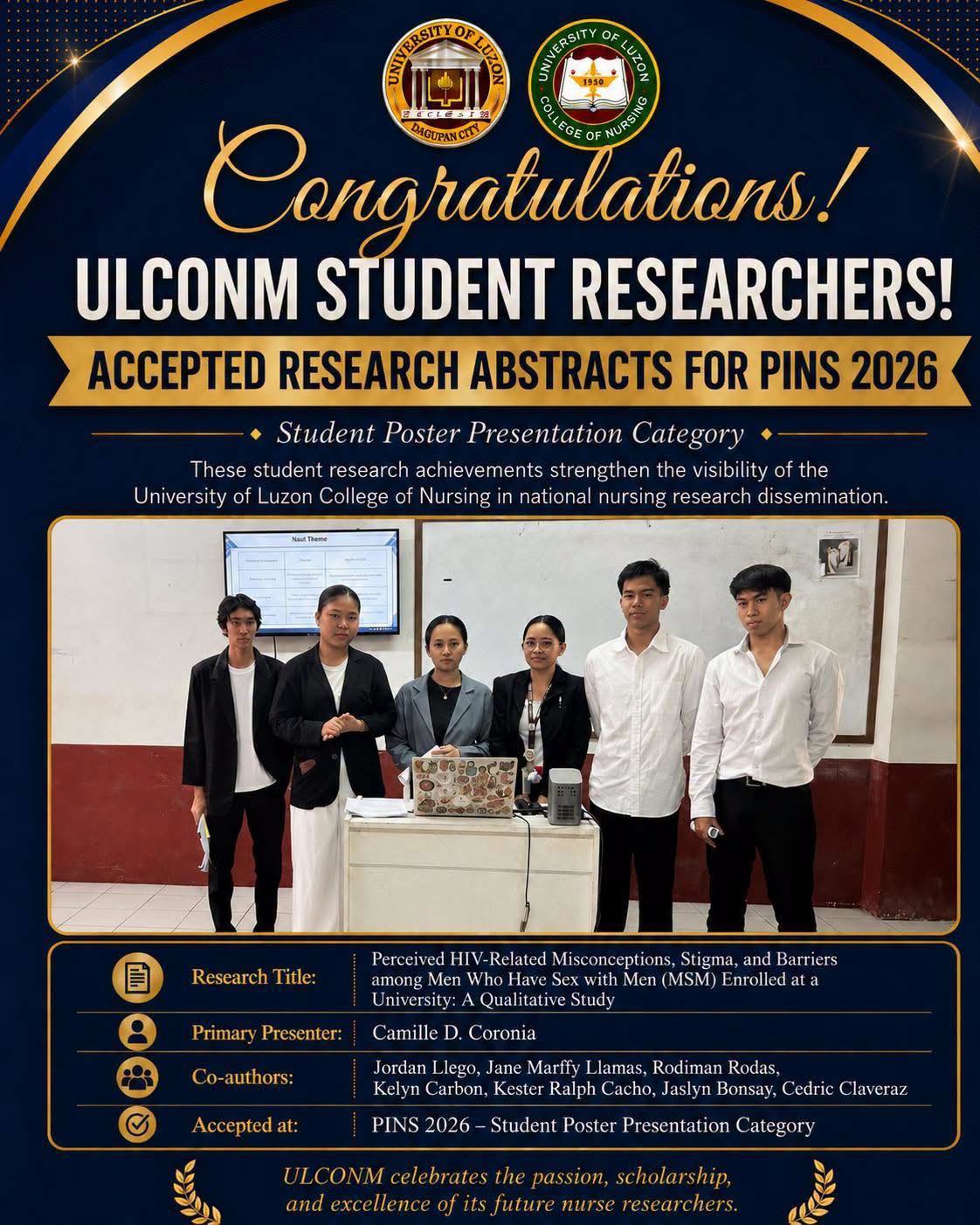
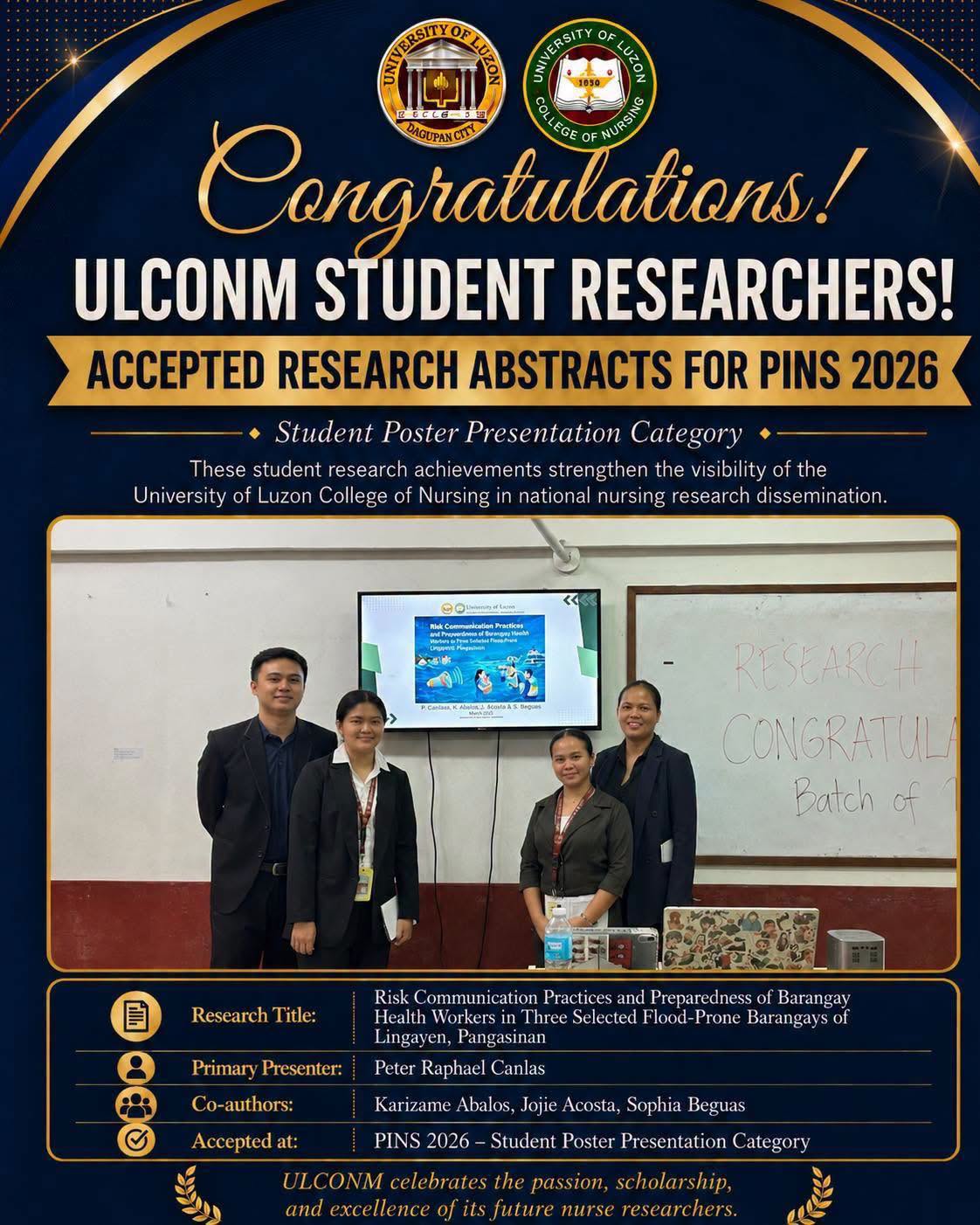
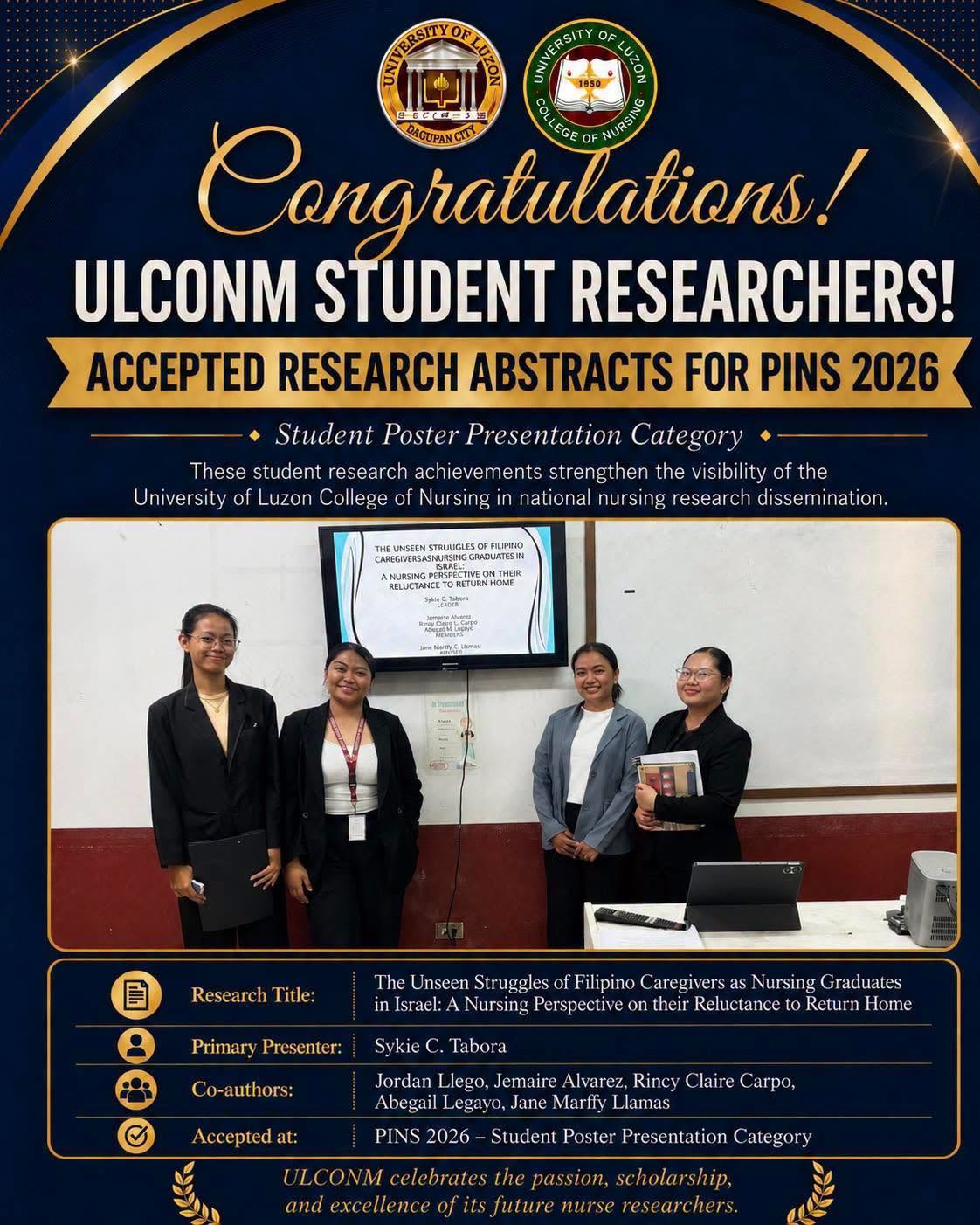
Student research teams from the University of Luzon College of Nursing and Midwifery had their research abstracts accepted for the Philippine International Nursing Scholars (PINS) 2026 on June 25, 2026, at National University–Mall of Asia (NU-MOA), under the Student Poster Presentation Category.
Four University of Luzon student research abstracts were accepted for the Student Poster Presentation Category. Kimberly Ann B. Aquino was the primary author of “Emotional Resilience of Student Nurses in End-of-Life Care: A Concurrent Mixed-Methods Study of Quantitative Predictors and Qualitative Experiences,” with Darwin Toralba Jr. and Jimmer Ann Tamondong as co-authors. Camille D. Coronia was the primary author of “Perceived HIV-Related Misconceptions, Stigma, and Barriers among Men Who Have Sex with Men (MSM) Enrolled at a University: A Qualitative Study,” with Jordan H. Llego, Jane Marffy C. Llamas, Rodmarn Rodas, Kelyn Carbon, Kester Ralph Cacho, Jaslyn Bonsay, and Cedric Claveraz as co-authors.
Furthermore, Peter Raphael Canlas was the primary author of “Risk Communication Practices and Preparedness of Barangay Health Workers in Three Selected Flood-Prone Barangays of Lingayen, Pangasinan,” with Karizame Abalos, Jojie Acosta, and Sophia Beguas as co-authors. Sykie C. Tabora was the primary author of “The Unseen Struggles of Filipino Caregivers as Nursing Graduates in Israel: A Nursing Perspective on their Reluctance to Return Home,” with Jordan H. Llego, Jemarie Alvarez, Rincy Claire Carpo, Abegail Legayo, and Jane Marffy C. Llamas as co-authors.
Their participation reflects the University of Luzon’s support for student-led research and meaningful learning beyond the classroom. Through research presentation, students gain opportunities to strengthen their academic skills, share evidence-based findings, and engage with current concerns in nursing and healthcare.
Research activities that address health concerns and strengthen student learning also contribute to sustainable development. In line with the United Nations Sustainable Development Goals, the studies advance SDG 3: Good Health and Well-Being by examining concerns such as HIV-related stigma and community health preparedness that affect human health; SDG 4: Quality Education through professional education that develops research skills, critical thinking, and evidence-based learning among nursing students; and SDG 17: Partnerships for the Goals through academic exchange and collaboration that allow researchers to share knowledge and build connections within the nursing community.
The University of Luzon congratulates its student research teams and their co-authors for contributing their work to PINS 2026 and advancing nursing research through studies addressing relevant health and community concerns.